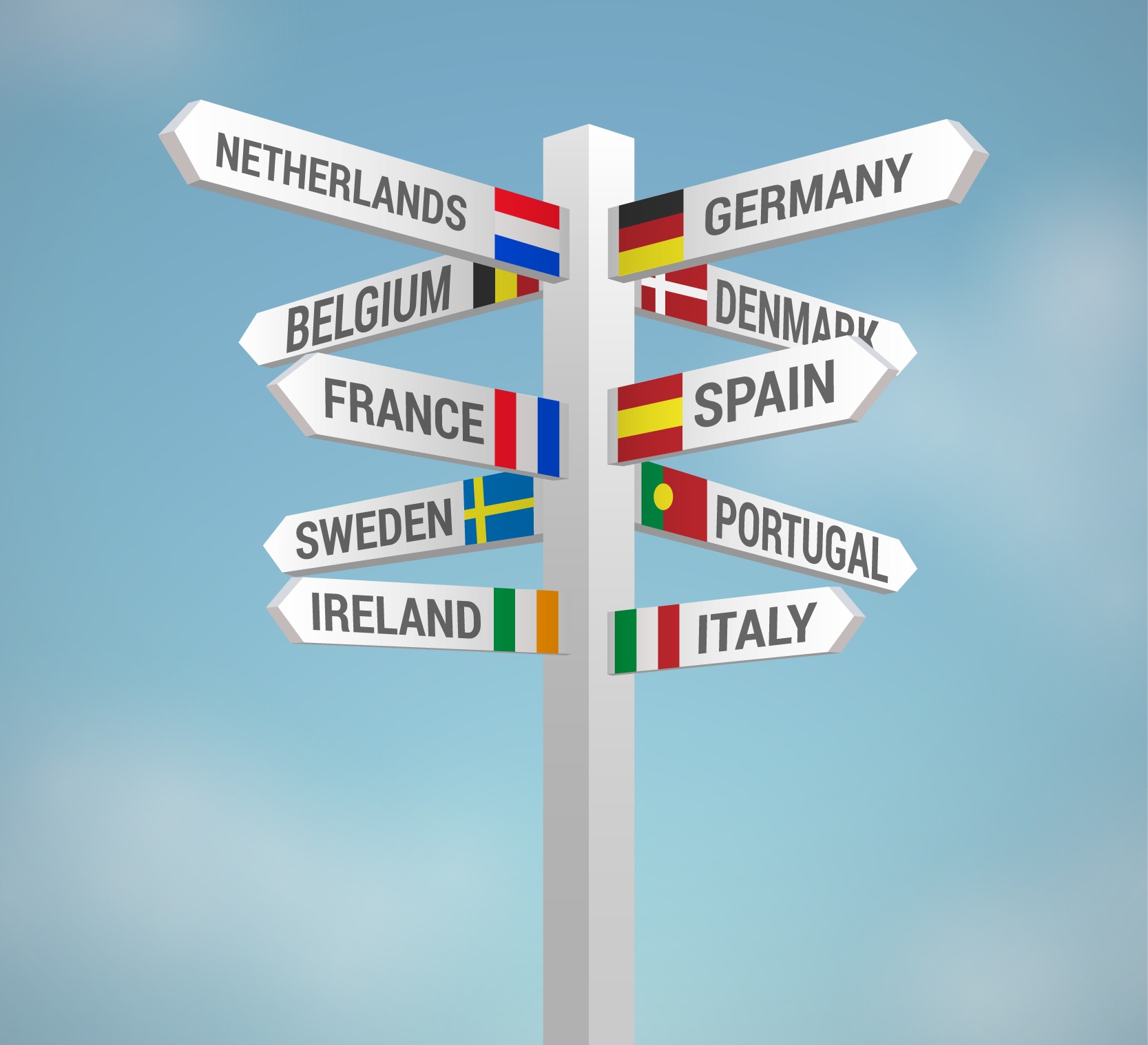
Three Ways to Get Citizenship
Before we get into countries you need to understand the three main routes. Each works differently and appeals to different people.
Naturalization
You live in a country for a set number of years, meet their requirements (language, integration, clean record), and apply. This is the most common path. Timelines range from 2 to 10 years depending on the country.
Citizenship by Investment
You make a qualifying financial contribution or investment and the country grants you a passport. Timelines can be as short as 2 months. Costs range from $100,000 to over $1 million.
Citizenship by Descent
If your parents, grandparents, or in some cases great grandparents were citizens of a country, you may already be eligible. No residency required in many cases.
Each route has trade offs. Naturalization is cheapest but slowest. Investment is fastest but most expensive. Descent is free but only works if you have the right ancestry.
Fastest Citizenship by Naturalization
These countries have the shortest residency requirements before you can apply for a passport through living there.
Argentina
The fastest naturalization in the world for a major country. Live there legally for 2 years on a residency permit and you can apply. Argentina is relatively easy to get residency in too. The catch: the economy is volatile, the peso fluctuates wildly, and bureaucracy can be slow. But for someone earning in dollars or euros remotely, Buenos Aires offers a great lifestyle at very low cost. An Argentine passport gives you visa free access to most of Europe and South America.
Peru
Also offers citizenship after just 2 years of permanent residency. Peru is affordable, the food is world class, and the residency process is straightforward. The passport is weaker than Argentina's for visa free travel but it is still a solid second citizenship.
Dominican Republic
Two years of residency, a relatively simple process, and Caribbean lifestyle. The passport offers limited visa free access compared to European options but the speed is hard to beat.
Paraguay
Popular with expats who want a fast, cheap second passport. Three years of permanent residency. Paraguay has one of the easiest residency programmes in the world to qualify for. Cost of living is very low. The main downside is that Paraguay's passport ranking is middling for visa free travel.
Canada
Offers citizenship after 3 years of permanent residency (you need to have been physically present for at least 1,095 days within the 5 years before applying). Canadian citizenship is extremely valuable with strong visa free travel. Getting permanent residency in Canada is the hard part — but if you qualify through Express Entry or another programme, the path to citizenship is relatively quick.
Fastest Citizenship by Investment
If you have money and want speed, these are your options.
Vanuatu
The fastest citizenship by investment programme on the planet. A contribution of roughly $130,000 for a single applicant gets you a passport. No residency required. No interviews. Fully remote process. Vanuatu's passport gives visa free or visa on arrival access to about 100 countries including the UK and Schengen Area. It is a South Pacific island nation so the passport is not as strong as a European one, but for pure speed nothing beats it.
St Kitts and Nevis
The oldest and most established Caribbean citizenship by investment programme. Minimum contribution of $250,000 to the Sustainable Island State Contribution fund, or a qualifying real estate investment. The passport gives visa free access to about 155 countries including the UK and Schengen.
Dominica
Similar to St Kitts but slightly cheaper. Contribution starts at $100,000 for a single applicant. Strong passport with visa free access to about 145 countries. Very popular with entrepreneurs and remote workers.
Turkey
Offers citizenship through a $400,000 real estate investment or $500,000 bank deposit. Turkish citizenship comes with a strong passport (visa free to about 115 countries) and access to a large, dynamic economy. Turkey also has a tax treaty network that can be useful for international business.
Malta
The only EU citizenship by investment option still operating. It is expensive, starting at around €690,000 in combined contributions and investments. But it gives you an EU passport which means freedom to live and work across all 27 EU member states. For people who want EU citizenship fast and have significant capital, Malta is the only direct route.
Easiest Citizenship by Descent
If you have the right family history, citizenship by descent can be the cheapest and easiest path. No residency required in many cases.
Ireland
Generous descent rules. If either of your parents was an Irish citizen, you are automatically an Irish citizen. If a grandparent was born in Ireland, you can register through the Foreign Births Register. Irish citizenship gives you an EU passport with full freedom of movement. Thousands of Americans, Brits, and Australians have claimed Irish citizenship this way.
Italy
Even more generous. Italian citizenship by descent (jure sanguinis) can go back multiple generations with no cutoff in many cases. If your great great grandfather emigrated from Italy and the citizenship was never formally renounced through the line, you may qualify. The process involves gathering birth, marriage, and death certificates. It takes patience (often 1 to 3 years of paperwork) but costs very little. An Italian passport is one of the strongest in the world.
Poland
Allows citizenship by descent if you can prove your parent or grandparent was a Polish citizen and never formally renounced. Many people with Polish Jewish ancestry have successfully claimed Polish (and therefore EU) citizenship through this route.
Hungary
Offers simplified naturalization for people who can prove Hungarian ancestry and demonstrate basic Hungarian language ability. The language test is modest but it is a real requirement.
Portugal
Has special provisions for descendants of Sephardic Jews who were expelled from Portugal centuries ago, though this programme has been tightened significantly since 2022.
Easiest European Countries for Citizenship
If your goal is an EU passport through living in Europe, these are the most accessible options ranked by how realistic the process actually is.
Portugal
The top pick for most people. Five years of legal residency, A2 Portuguese (basic conversational level), and a clean criminal record. Portugal also has clear visa routes to get you there in the first place — the D7 for passive income, D8 for remote workers, and D2 for entrepreneurs. The weather, cost of living, and quality of life make the five year wait genuinely pleasant. An EU passport at the end opens up the entire continent.
Belgium
Requires 5 years of legal residency with proof of economic or social integration. Language requirements depend on your region. Belgium is one of the more straightforward European naturalization processes.
France
Requires 5 years of residency plus B1 French and a civic exam on republican values (tightened in January 2026). France has a strong passport and living there is culturally rich, but the language bar is higher than Portugal's A2 requirement.
Germany
Dropped its residency requirement from 8 years to 5 in the June 2024 reform (3 years with exceptional integration). Germany now allows dual citizenship, which was the big change. Strong economy, excellent healthcare and schools.
Ireland
Requires 5 years of residency (4 years plus 1 continuous year). No formal language test since English is an official language. If you are already an English speaker, Ireland removes the language barrier entirely.
Sweden
Requires 5 years of continuous residence. No formal language test is required for citizenship. Sweden is one of the few countries where you can naturalize without a language exam.
Spain
The outlier. A decade of residency for most nationalities. However, citizens of Latin American countries, Portugal, the Philippines, Equatorial Guinea, and Andorra only need 2 years. If you hold one of those passports already, Spain becomes one of the fastest routes in Europe.
Comparison Table
| Country | Route | Timeline | Cost | EU Passport? |
|---|---|---|---|---|
| Argentina | Naturalization | 2 years | Low | No |
| Paraguay | Naturalization | 3 years | Very low | No |
| Canada | Naturalization | 3 years (after PR) | Moderate | No |
| Portugal | Naturalization | 5 years | Low to moderate | Yes |
| Germany | Naturalization | 5 years | Moderate | Yes |
| Ireland | Naturalization | 5 years | Moderate | Yes |
| France | Naturalization | 5 years | Moderate | Yes |
| Spain | Naturalization | 10 years (2 for some) | Moderate | Yes |
| Vanuatu | Investment | 2–4 months | ~$130,000 | No |
| Dominica | Investment | 3–6 months | ~$100,000 | No |
| St Kitts | Investment | 3–6 months | ~$250,000 | No |
| Malta | Investment | 12–14 months | ~€690,000+ | Yes |
| Ireland | Descent | 6–12 months | Minimal | Yes |
| Italy | Descent | 1–3 years | Minimal | Yes |
| Poland | Descent | 6–18 months | Minimal | Yes |
What Most People Get Wrong
A few things worth flagging because we see the same mistakes constantly.
Residency is not citizenship.
Getting a visa and living somewhere for a year does not make you a citizen. It starts the clock. You still need to meet the full residency period, pass language tests, and submit a proper application. Do not confuse the two.
Physical presence matters.
Most countries require you to actually be in the country for a certain number of days per year during your residency period. Portugal is relatively flexible on this, but Germany and France are strict. If you plan to travel heavily during your residency period, check the rules carefully.
Language tests are real.
A2 Portuguese is manageable for most people with a few months of classes. B1 German or French requires genuine effort over a year or more. Do not underestimate this.
Investment does not mean you skip everything.
Even investment programmes have due diligence checks, interviews, and processing times. If you have a criminal record or certain financial issues, you will be rejected regardless of how much money you put up.
The cheapest option is not always the best.
A Vanuatu passport gets you through airports faster, but it does not let you live and work in Europe. An EU passport from Portugal takes longer but opens 27 countries permanently for you and your children. Think about what you actually need the passport for.
Frequently Asked Questions
What is the absolute fastest way to get a second passport?
Vanuatu's citizenship by investment programme. About 2 to 4 months from application to passport in hand. No residency, no interview, no language test. Costs roughly $130,000 for a single applicant. If speed is all that matters, this is the answer.
Which is the easiest European country to get citizenship?
Portugal for most people. Five years of residency with an A2 language requirement (basic conversational Portuguese). Clear visa routes to get residency in the first place. Great quality of life during the wait. Ireland is easier on language (English speaking) but harder to get residency unless you have a job offer or Irish ancestry.
Can I get citizenship without living in the country?
Through investment programmes, yes. Vanuatu, Dominica, St Kitts, and several others do not require you to live there. Through descent, often yes — you apply from wherever you are. Through naturalization, no. You must physically live in the country for the required period.
How much does citizenship by investment actually cost for a family?
It varies hugely. Dominica starts around $100,000 for a single applicant but rises to $175,000+ for a family of four. St Kitts is $250,000+. Malta for a family runs well over €1 million. Caribbean options are the most affordable for families.
Will getting a second citizenship affect my current one?
Depends on your country. The US, UK, Canada, France, Portugal, Germany, and most Western countries allow dual citizenship. China, Japan, India, Singapore, Saudi Arabia, and the UAE generally do not. If your country bans dual citizenship, taking a second passport may mean losing your first. Always check before proceeding.